Architect, Building Designer or Draftsperson: What’s the Difference
Planning a renovation or new home is a significant investment. One of the most important early decisions is choosing the right professional to design it.
Many homeowners compare architects, building designers, and draftspersons — but the differences between these roles are often unclear.
We regularly speak with families who are surprised to learn that the title architect is legally protected, and that not all design professionals follow the same standards of education, regulation, or accountability.
Understanding these differences helps you make an informed decision — and gives your project the best chance of success.
St Ives alterations and additions- From an architect’s initial hand sketch to a detailed 3D render
Architects
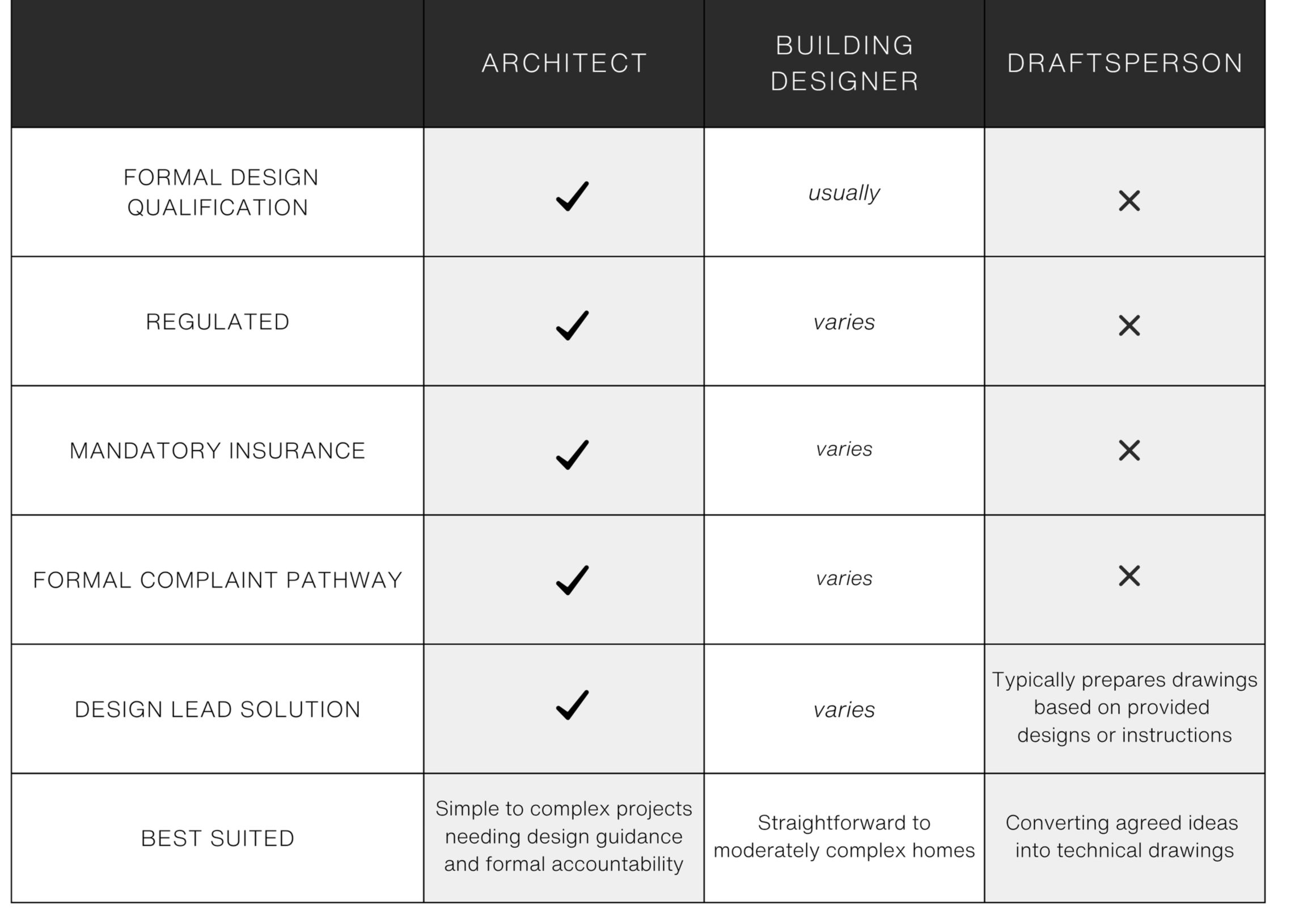
Registered architects complete 5–7 years of accredited university study, followed by supervised professional experience and a national registration examination.
They are trained not only in design, but in critical thinking, spatial problem-solving, and responding to complex site and planning constraints. This often leads to more considered and integrated design solutions, particularly for projects with multiple layers of complexity.
They typically explore multiple options for a single brief, guiding you toward the most appropriate solution while coordinating with consultants, council, and builders throughout the process. Many architects also prepare master plans and staging strategies, allowing projects to be delivered thoughtfully over time.
Once registered, architects must:
Comply with the Architects Act
Follow a strict Code of Professional Conduct
Carry professional indemnity insurance
Undertake ongoing professional development
Accept legal responsibility for the quality, safety and integrity of their work
This means architects are held to a high and clearly defined standard across design, documentation, ethics, client care, communication, and construction oversight.
It also provides formal avenues for recourse through the Architects Registration Board if something goes wrong, offering a level of consumer protection not available with unregulated design services.
We’ve explored the advantages of collaborating with an architect in more detail in our article on the benefits of working with an architect.
An architect will usually explore different design options to meet your brief and guide you in choosing the best option.
Building Designers
Building designers can provide valuable services, particularly for simpler projects, and many bring strong practical experience.
However, their education and qualifications can vary significantly. A building designer may have:
A certificate or diploma
A design-related degree
Or no formal design qualification
Some building designers use titles such as architectural designer. While this can describe their design focus, it does not indicate registration. Unless they are a registered architect, they are not held to the same regulatory framework and cannot legally use the title architect.
Draftspersons
Draftspersons specialise in preparing drawings rather than leading the design process.
They typically:
Work to a set of instructions rather than developing design concepts
Do not provide design strategy or project leadership
Focus on documentation for straightforward approvals
Their services are best suited to simple, prescriptive projects such as carports, sheds, or minor CDC applications.
So who should you choose?
It depends on the complexity of your project and how much guidance you need.
For very simple projects, where you know exactly what you want, a draftsperson can be a cost-effective option.
For more considered projects, where you want ideas, problem-solving, and coordination with consultants, council, and builders, you would typically work with either an architect or a building designer.
There is a common perception that architects are always more expensive, but this is not necessarily the case. Fees vary widely across all professions. The key difference is certainty.
Working with a registered architect gives you confidence in:
Their level of training
The standard they are held to
The protections available to you as a client
If you choose a building designer, the responsibility sits more with you to assess their capability and ensure they are appropriately qualified and insured.
Summary
We’ve prepared a simple comparison table below to help clarify the key differences.